Tokyu Land Corporation and Shimizu Corporation have announced a pilot initiative to reuse end-of-life solar photovoltaic (PV) panels at construction sites in Japan, according to a press release published on PR TIMES on January 9, 20261.
Under the initiative, used solar panels originally installed at power generation facilities owned by Tokyu Land are repurposed and installed at construction sites managed by Shimizu Corporation. Electricity generated by the reused panels is utilized directly on-site, supporting more environmentally conscious construction site operations.
Overview of the Reuse Initiative
The reused solar PV panels have been installed at two construction sites in Hokkaido: the Onuma Tunnel Togeshita Section construction project and the (tentative name) Matsumae Phase 2 Onshore Wind Power Plant construction project.
Tokyu Land supplies the end-of-life solar panels, while Shimizu Corporation is responsible for installation and on-site operation. Electricity generated from the panels is used to power equipment within the construction sites, contributing to smoother and safer site operations.
At the Onuma Tunnel project, power generated by the reused panels is used to operate monitors in the site’s information center. A battery system installed alongside the panels can reach full charge in as little as 36 minutes and is capable of powering eight monitors for approximately 10 hours when fully charged.
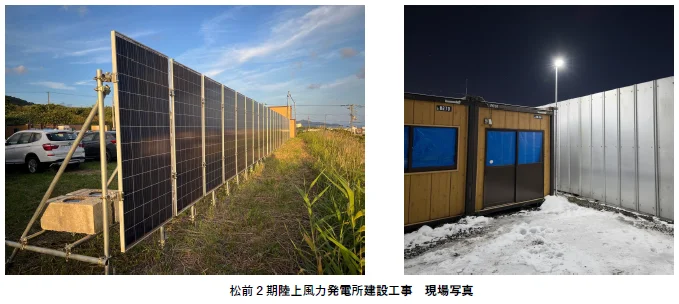
At the Matsumae Phase 2 onshore wind project, electricity generated by reused solar panels is used for lighting within the site office. The panels are installed vertically, allowing them to serve a dual function as visual barriers for material storage areas, which also contributes to improved site security.
Background: Growing Focus on End-of-Life Solar Panels in Japan
Japan experienced rapid growth in solar power installations following the introduction of the Feed-in Tariff (FIT) scheme in 2012. With a typical solar panel lifespan of 25 to 30 years, a large volume of panels installed under the FIT program is expected to reach the end of their operational life from the late 2030s onward.
As concerns grow over the future mass disposal of solar panels, both public and private sector actors in Japan have begun exploring reuse and recycling options to reduce waste generation, improve resource efficiency, and mitigate environmental impact. The initiative by Tokyu Land and Shimizu reflects this broader shift toward lifecycle-oriented management of renewable energy assets.
Why This Matters
While discussions around end-of-life solar panels in Japan have often focused on the development of future recycling systems, this initiative highlights the role of reuse as an interim and practical solution. By repurposing used panels for on-site power generation at construction sites, companies can extend the functional life of solar panels while reducing waste and operational emissions.
This case also illustrates how reuse models can be integrated into existing industrial workflows without requiring large-scale infrastructure changes. As Japan prepares for a significant increase in decommissioned solar PV panels over the coming decades, similar reuse initiatives may serve as important reference points in bridging the gap between current practices and more comprehensive recycling frameworks.
Reference
- 東急不動産株式会社, “使用済み太陽光パネルの再利用で、循環型社会の形成に寄与.” Accessed: Jan. 10, 2026. [Online]. Available: https://prtimes.jp/main/html/rd/p/000000607.000006953.html ↩︎